Connecting Gulf South property owners with trusted foundation repair professionals.
Foundation movement is a symptom, not a diagnosis. The useful question is why the structure or surrounding soil is moving and what, if anything, should be corrected.
Gulf South Foundation is a connection service — we match property owners throughout Louisiana, Southeast Texas, and South Mississippi with local, licensed and insured foundation repair professionals. We do not perform foundation repair work ourselves.
When you contact us, we connect you with a vetted professional who specializes in the specific foundation challenges of your area. Gulf South soils — from Shreveport clay to New Orleans subsidence to Beaumont gumbo — require local expertise that only comes from years of working in each specific market.
Every professional in our network is licensed in their state, carries general liability insurance, and has demonstrated experience with the foundation types and soil conditions common to their region.
Professionals in our network provide transparent evaluations with no unnecessary upselling. You get an honest picture of what needs to be done — and what can wait.
Gulf South foundation repair requires local knowledge. Beaumont gumbo clay behaves differently from New Orleans subsidence soils. Our professionals understand the specific conditions of their market.
We connect you with professionals focused on fixing the root cause — not just cosmetically patching cracks that will return within months.
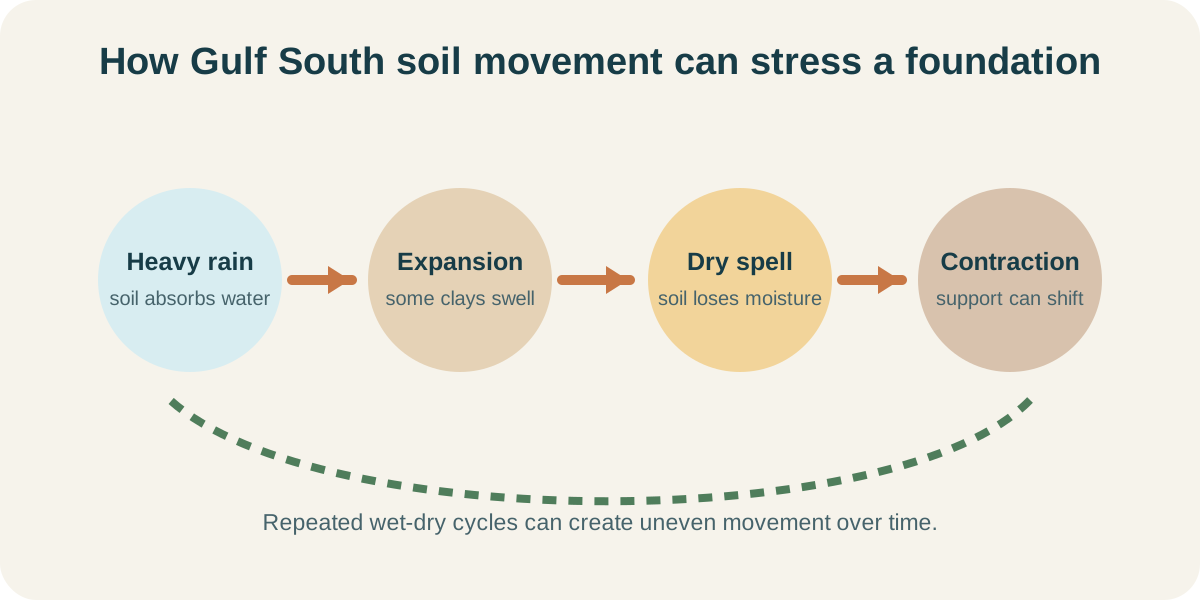
Properties in the Gulf South can experience foundation stress for different reasons, including drainage, soil moisture changes, plumbing leaks, settlement and the design of the structure. A local inspection is the right way to separate cosmetic symptoms from a condition that needs corrective work.
Good foundation work starts with diagnosis—not with choosing a product before the property is evaluated.
Note where cracks, sticking openings, floor changes, water or exterior movement are occurring and whether they are changing.
A local provider can evaluate the foundation type, visible structure, elevations where appropriate, drainage and likely contributing conditions.
If corrective work is recommended, the scope should address the diagnosed cause and explain what will be stabilized, repaired or monitored.
Answers are general educational guidance; property-specific recommendations require an on-site assessment.
Common warning signs include stair-step masonry cracks, widening drywall cracks, doors or windows that begin sticking, uneven or sloping floors, gaps at trim, and visible movement around porches or exterior slabs. One symptom alone does not prove structural failure, so an on-site assessment is the best next step when changes persist or worsen.
Foundation movement can have several causes, including changing soil moisture, drainage patterns, plumbing leaks, erosion, fill settlement, tree roots, and the original foundation design. Conditions vary block by block, so a provider serving the Gulf South should evaluate the property itself rather than diagnose the cause from a photograph alone.
No. Concrete, masonry and interior finishes can crack for reasons that are not structural. The location, width, direction, progression and related symptoms matter. If a crack is growing, recurring after repair, or appearing with sticking doors or uneven floors, it is sensible to have it evaluated.
The provider may review the visible symptoms, floor elevations, drainage, foundation type and accessible structural components. For properties around the Gulf South, the assessment should also consider how water moves across the lot and whether recent weather, plumbing or construction changes may be contributing.
Repair methods depend on the foundation system and the cause of movement. A slab, pier-and-beam home, crawl space and settled concrete surface can require very different approaches. The recommended scope should follow the diagnosis rather than forcing every property into the same repair method.
Yes. Concentrated roof runoff, negative grading, standing water, erosion and plumbing leaks can change moisture conditions around a foundation. Correcting water-management problems is often an important part of protecting a repaired or currently stable foundation.
A sudden change, significant displacement, plumbing break, or condition that creates an immediate safety concern deserves prompt professional attention. Slow cosmetic changes can often be documented and evaluated on a normal appointment schedule, but waiting until several symptoms compound can make the underlying problem harder to understand.
Gulf South Foundation is a referral and information site. We collect your request and connect you with an appropriate local service provider serving the Gulf South. The provider evaluates the property, explains findings and discusses any recommended work directly with you.
Send a few details and your request can be routed to a local foundation service provider.
By submitting, you agree to be contacted about this request by Gulf South Foundation and a local service provider. See the Privacy Policy.
Connect with a licensed foundation repair professional throughout the Gulf South.
(504) 608-4900 Request Free Assessment